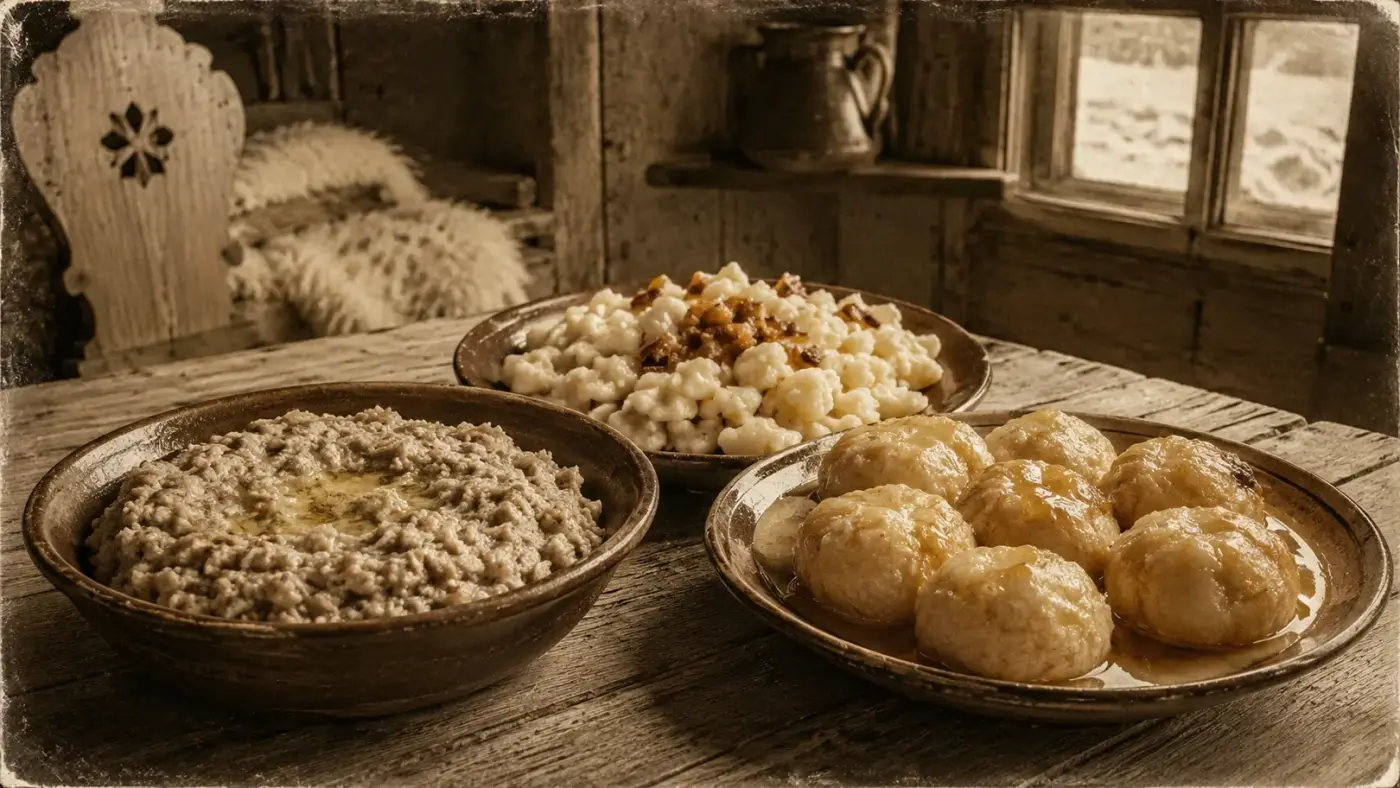
Bryjka, an everyday dish you’d be hard-pressed to find these days
It’s hard to find a better example of a forgotten dish than bryjka. For centuries, it was an everyday dish for highlanders, simple to the point of pain: flour, usually oat flour, was boiled in salted water and topped with a sauce, such as lard or butter. Today, bryjka has almost vanished from inn menus, as it is considered an unappealing dish. What was once eaten every day has become a culinary curiosity.
Hałuski, the dumplings disappearing from menus
Hałuski are regional potato dumplings, served with warm milk, local cheese or a topping of cracklings. It is a simple and filling dish, yet one that is becoming increasingly rare. Today, it is hard to find a restaurant in Zakopane that has them on the menu. Further proof that the most homely dishes are the quickest to disappear.
Moskole potato flatbreads, once made with oats, now made with potatoes
Moskole potato flatbreads is an interesting example of a dish that has survived but changed completely. In the past, these pancakes served as a substitute for bread and were made from oat flour. Today, they’re usually made from boiled potatoes and served with butter, bryndza or smoked bacon. The same name, yet a different dish from the one of a hundred or two hundred years ago.
Forgotten delicacies: bombolki, fizoły and sałaciorka
The old menu also featured dishes whose names sound downright mysterious today. Alongside moskoli, people ate bombolki, whilst dishes such as fizoły, a bean dish, and sałaciorka only made the occasional appearance on the table. These are remnants of a culinary vocabulary that was richer than it seems, now largely forgotten.
Żętyca, a drink straight from the shepherd’s hut
Żętyca is also a rarity today; it is whey from sheep’s milk produced during the making of oscypek and bundz. For shepherds of old, it was an everyday, nourishing drink consumed straight from the shepherd’s hut, either fresh or slightly soured. Today, one has to go out of one’s way to find it, and many tourists are completely unaware that it even exists.
Traditional culinary customs
It is not just the dishes that have become a thing of the past. The whole culture of customs that accompanied eating has also disappeared.
Cheese as payment
Today we pay for cheese; in the past, people paid with cheese. A ‘Juhas (shepherd)’ (shepherd) would receive one ‘oscypek’ for a day’s sheep herding. Cheese was therefore not only food, but also a measure of value and a form of remuneration.
Eggs only for special occasions
A small detail best illustrates the extent of poverty in the past. On poorer farms, children might never have tasted eggs, as these were served only on special occasions. A product that is taken for granted today used to be a luxury.
Linseed oil during Lent
Fasting was observed strictly, and the use of lard was forbidden during this time. To season dishes, people used oil pressed from linseed in rural oil mills, one of the few permitted fasting fats.
Rituals surrounding grain
Food and farm work were steeped in ritual. Grain consecrated on St Stephen’s Day was added to the oats being sown, and the plough, horses and ploughman were sprinkled with holy water. Thus, the eating began as early as the sowing stage.
Respect embedded in everyday life
These gestures show that, for the highlanders of old, food was a gift that had to be sought after and which deserved respect. It is an attitude that has largely disappeared today, in these times of abundance.
Why have these dishes disappeared?
The reason is, in fact, quite simple. Many traditional dishes arose out of poverty and necessity, and as living conditions improved, they were no longer needed. Bryjka or plain porridge were associated with hard times, so people were keen to replace them with something more substantial. Tourism favoured showy dishes rather than everyday fare, which is why the most humble ones have been forgotten. That is precisely why it is worth reviving them, for they are the true roots of the Podhale cuisine.