Farming in defiance of nature
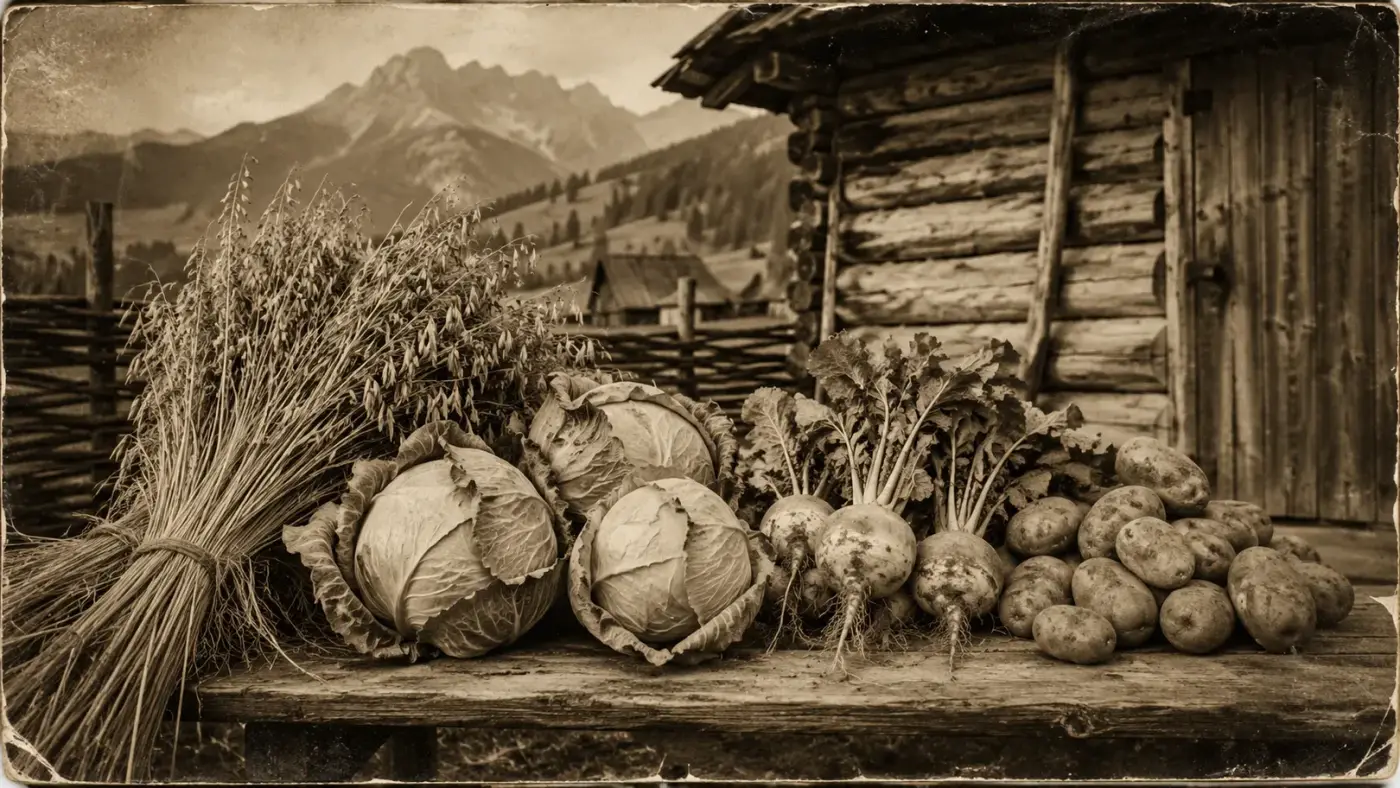
The soils of Podhale, mixed with peat, clay and loam, were not particularly fertile, and the altitude and climate made cultivation even more difficult. As early as the Middle Ages, the settlers’ difficult conditions, poor soil and harsh climate were taken into account when determining their obligations to the Church, resulting in a reduction in their tithes. On the steepest slopes, it was really only worth growing two crops: potatoes and cabbage.
Oats, the king of the Podhale fields
Oats were the most important cereal. They withstood the mountain climate better than other cereals and formed the basis of the rural families’ diet. It was from oat flour that the daily porridge, noodles and flatbread were made. Oats were so important that rituals were even associated with them: grain consecrated on St Stephen’s Day was added to the seed being sown.
Barley and spring barley
Alongside oats, barley was sown; it was still cultivated in the Podhale region until the 1960s. It was often sown as part of a crop rotation, in fields after the potato harvest. Spring cereals were also grown. These crops complemented the oat-based diet and provided grain and straw for fodder.
Potatoes, or ‘grule’, which changed everything
Although they seem to have been around forever, potatoes, known as ‘grule’ in the highlander dialect, only became widespread in Podhale in the 19th century. Once they had taken root, they quickly rose to become one of the mainstays of the diet. They were easy to grow even on steep slopes and were filling, so they featured in almost every meal: boiled, mashed, added to cabbage and to pancakes.
Cabbage and turnips: vegetables for the winter
Vegetables had to meet one condition: they had to be storable for the long winter. That is why cabbage was so important, pickled in huge barrels to ensure the supply lasted until spring. Turnips played a similar role, being both cheap and filling. Together with potatoes, they formed the vegetable backbone of the highlanders’ diet during the colder months.
Flax: not just for cloth
Flax was grown primarily for its fibre, which was used to weave cloth for clothing. However, it also had a second, culinary use.
Linseed oil
Oil was pressed from linseed in rural oil mills. It was used to dress dishes, particularly during Lent, when it was one of the few permitted edible fats. In this way, a single plant both clothed and fed the highlander.
Less obvious plants: garlic and clover
Not everything grown in the fields of Podhale was intended solely for the family’s own consumption. Some crops became local specialities and commodities.
Garlic from Maruszyna and Skrzypne
A real curiosity is the garlic grown in Maruszyna and Skrzypne. The local garlic fields, covering as much as ten ares, supplied garlic for trade.
Garlic transported as far as Gdańsk
The scale of this cultivation was such that garlic from these villages was transported for sale as far as distant Gdańsk. This shows that agriculture in the Podhale region was not solely a self-sufficient system for personal consumption.
Clover for livestock
Towards the end of the 19th century, clover appeared in the fields, cultivated mainly as fodder. By the interwar period, it already occupied around eleven per cent of arable land, which shows how the importance of livestock farming was growing.
What people ate versus what the animals ate
Not everything that grew ended up on people’s plates. Hay was the staple feed for livestock. Straw was also highly valued: oat straw was considered better, whilst barley straw was regarded as inferior. This distinction shows that every plant had its own strictly defined purpose in the Podhale region, and nothing was allowed to go to waste.