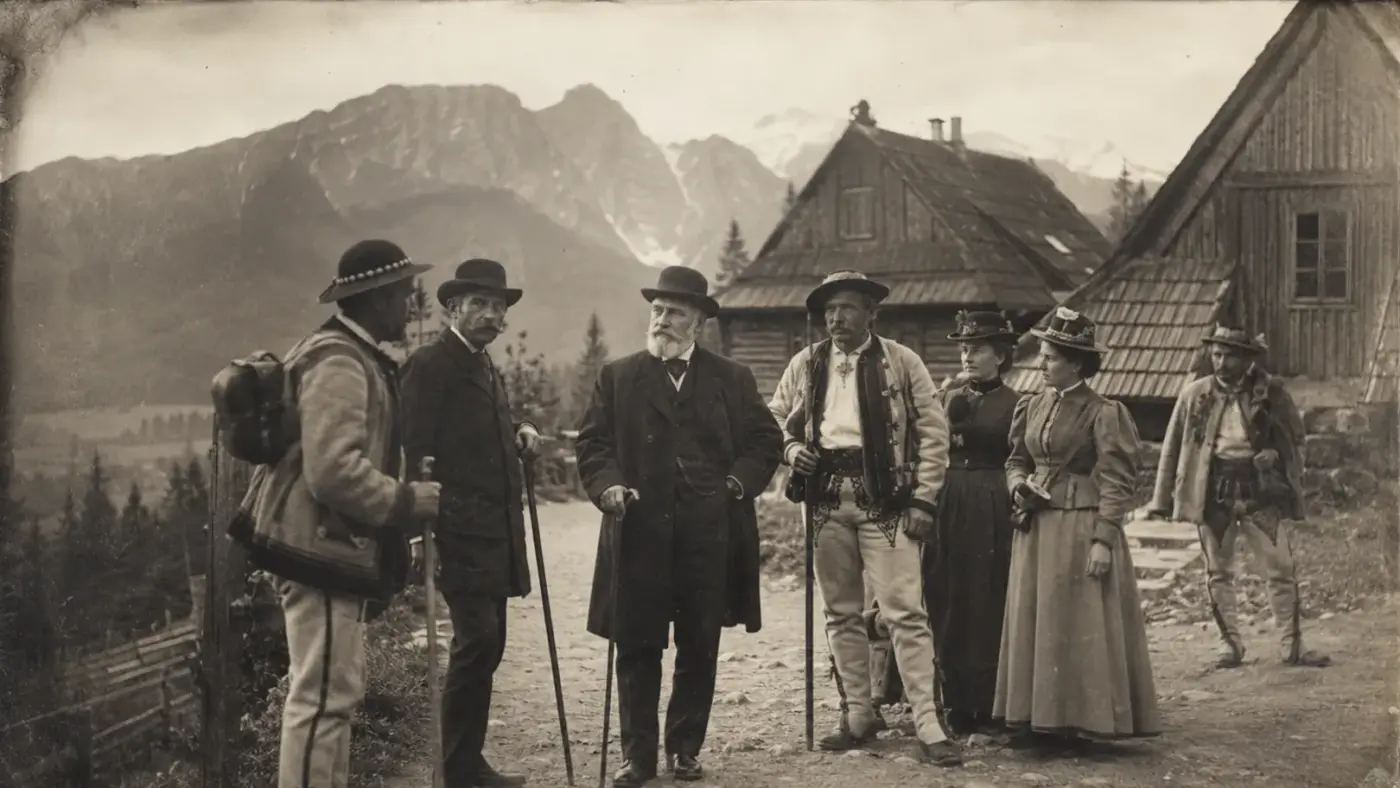
The cuisine of poverty meets visitors from the city
At first, this change had nothing to do with flavours, but with money. As long as Podhale was cut off and impoverished, the cuisine remained self-sufficient and modest. Everything began to change when the first spa guests and tourists arrived in the mountains, needing a roof over their heads and food.
Tytus Chałubiński and the discovery of Zakopane
One doctor is regarded as the symbolic figure who sparked this revolution.
The year 1873 and the craze for mountain air
Dr Tytus Chałubiński, a Warsaw-based doctor, played a pivotal role in making Zakopane famous as a health resort. It is believed that from around 1873, he began visiting the Tatra Mountains regularly and spreading the word about the health benefits of the mountain climate. Thanks to his authority, Zakopane gained renown as a climatic resort and began to develop into a major health resort.
The Tatra Society
In that same year, 1873, the Tatra Society was founded, which contributed enormously to the development of tourism and the village itself. It was on its initiative that schools and institutions were established, and in 1888, Poland’s first regional museum, the Tatra Museum, was founded.
The railway of 1899: a true turning point
The railway proved to be the greatest catalyst for growth. The completion of the railway line from Chabówka to Zakopane in 1899 made access considerably easier. The effect was immediate: the number of visitors arriving at the Tatra spa rose sharply. Along with them, the demand for accommodation and food grew.
How tourists changed the highlanders’ wallets and cooking pots
The influx of visitors created something that the Podhale of old had never known: a steady market for local food.
Dairy products for sale to guesthouses
Ethnographers noted that housewives would take milk, butter, cheese and cream to the market in Zakopane, to guesthouses and private homes. Dairy products, which had previously been difficult to sell, suddenly became a sought-after commodity. This improved the livelihoods of the farms, but it also meant that many products were sold rather than consumed at home.
Meals for guests as a new source of income
The highlanders quickly realised that they could earn money from tourists in ways other than just selling produce. Rooms in cottages were let out, meals were prepared, and carts and horses were hired out. Thanks to this income, living conditions for many families improved, and cooking for strangers became part of the local economy.
From cottage to inn: the birth of regional cuisine
It was precisely from cooking for guests that regional cuisine, as we understand it today, was born. Simple, home-style dishes such as ‘sour cabbage soup (kwaśnica)’, ‘moskole potato flatbreads’ and dishes made with oscypek began to appear on the menus of inns and restaurants. What was once the cuisine of the poor has become a tourist attraction and a defining feature of the region’s identity.
Oscypek sheep cheese with cranberries and other new additions
Alongside this commercialisation, dishes have emerged that are now regarded as typically highlander, although they are relatively new. The best example is warm ‘oscypek sheep cheese’ with cranberries, which is a modern variation rather than an old, traditional shepherd’s dish.
Tradition and marketing on a single plate
Such combinations were created with the guest and their palate in mind. This does not detract from their flavour, but it is worth remembering that some of the dishes associated with ‘Podhale’ are a product of the tourism era, rather than the mountain huts of yesteryear.
Authenticity as a value
That is why knowledge of what is truly ancient and what has emerged more recently is increasingly valued today. Understanding this distinction is part of showing respect for the true traditions of Podhale.
What we have gained, and what we have lost
The growth of tourism has brought highlanders’ cuisine publicity, a market and ensured the survival of many recipes. However, there was also a downside.
Has the traditional cuisine disappeared?
Some researchers and food connoisseurs point out that the authentic, everyday cuisine of the Podhale of old has largely disappeared, and what we eat in taverns is often a festive, embellished version of it. Contemporary restaurants are increasingly combining old recipes with modern techniques, in an attempt to reconcile fidelity to tradition with the expectations of their guests.