What animals were reared in Podhale: sheep, cows and their influence on the local cuisine

Blog · Kuchnia Podhala

What animals were reared in Podhale: sheep, cows and their influence on the local cuisine

Without animals, there would be no highlander cuisine as we know it. It was sheep and cows, not fields, that provided the most important products: milk, cheese and fat. Livestock farming in Podhale, however, had its own, strictly organised world, in which every animal and every person had their own role. Let’s take a look at what was reared and how, and how this translated onto the plate.

Two worlds of livestock farming: sheep and cows

Highland pastoral farming was divided into two distinct types, each practised in a completely different way.

Sheep: collective farming on the mountain pastures

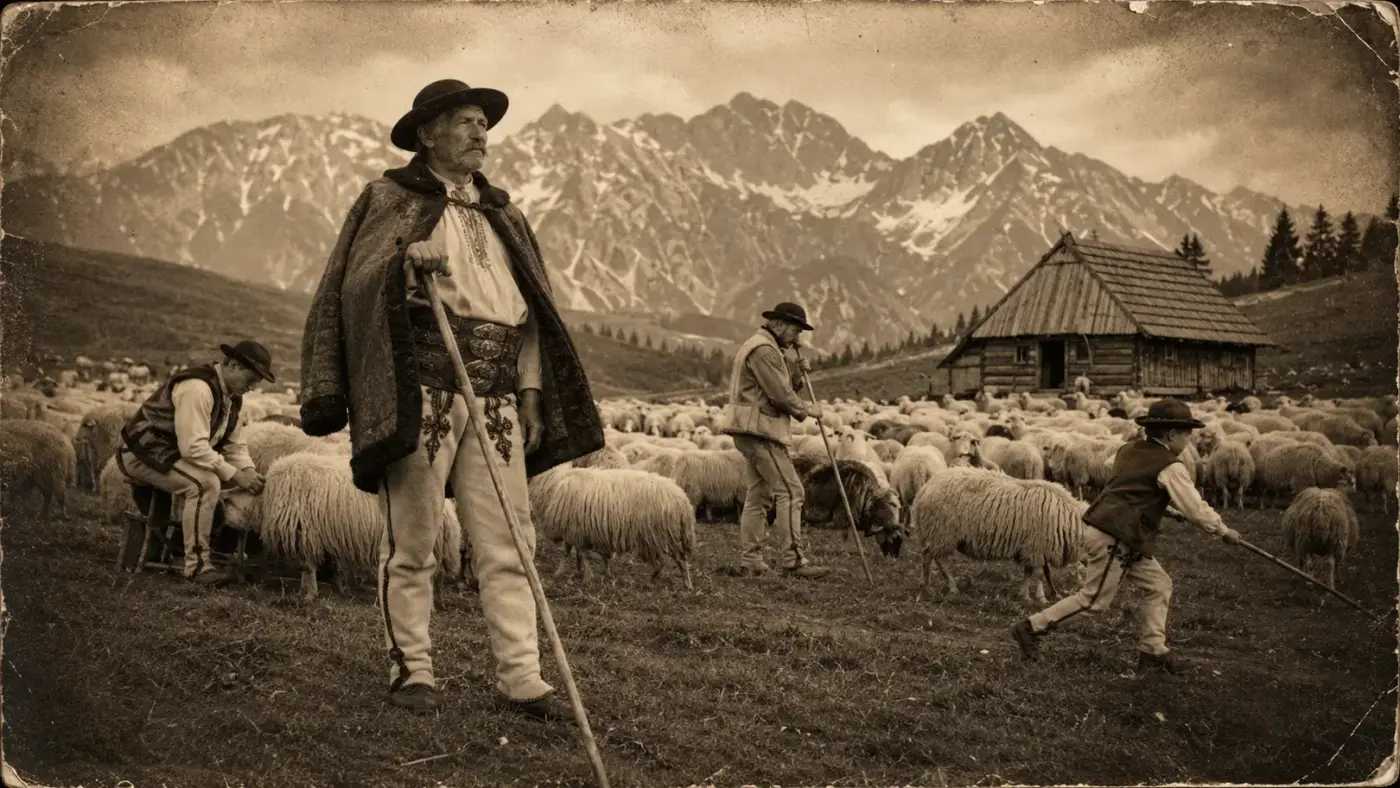
Sheep farming was a communal endeavour. It was based on the joint ownership of mountain pastures and communal grazing. Farmers would pool their flocks to graze them together high in the mountains throughout the season.

Cows: an individual affair

Cattle farming was a completely different affair. It was carried out individually, mainly in clearings, and the cattle were kept primarily for their milk. The cow was the main source of dairy produce on the farm.

The sheep farmers: the ‘baca (head shepherd)’, the ‘juhas (shepherd)’ and the ‘honielnik’

Communal grazing required organisation and a hierarchy. At the head of this stood the ‘baca’, the grazing organiser elected by the group of farmers, usually one of the wealthiest co-owners. Working under him were the ‘juhas’, who were responsible for grazing and milking the sheep. At the very bottom of the hierarchy was the ‘honielnik’, a boy who herded the sheep.

Payment in cheese

The extent to which cheese served as a form of currency here is evidenced by the method of remuneration. A single shepherd might tend around a hundred sheep, and a ‘juhas’ would receive one ‘oscypek sheep cheese’ for a day’s work. Cheese was therefore not only food, but also a measure of value.

What sheep provided: milk richer than cow’s

Sheep’s milk is more concentrated than cow’s milk, richer in fat, protein and minerals. It was this, rather than the meat, that was the main contribution of sheep to the kitchen.

Bryndza sheep cheese, oscypek sheep cheese, bundz and redykołka

A whole family of cheeses was made from sheep’s milk in the mountain pastures. Bundz is a fresh, white cheese; bryndza sheep cheese is its soft, salted variety; oscypek are hard, spindle-shaped cheeses; and redykołki are small cheeses, often decorated with patterns.

Three products with EU certification

The status of these products is now officially recognised. Podhale ‘Bryndza sheep cheese’, ‘oscypek sheep cheese’ and ‘redykołka’ have been granted the EU Protected Designation of Origin status. This is a seal of authenticity for products with a centuries-old tradition.

Cheese as the region’s calling card

Thanks to these certifications, Podhale cheeses are now recognised throughout Europe, and their recipes are protected against counterfeits.

Podhale Cakiel, a sheep from centuries past

It is worth noting that traditional cheeses were made from the milk of a primitive, ancient breed. The Podhale Cakiel is a native mountain sheep, now threatened with extinction and with a small population. For centuries, it provided the milk for oscypek and bryndza, before newer breeds of mountain sheep became widespread.

Animals on the farmstead: pigs, horses and poultry

Sheep and cows were not the only animals. Highlanders also kept pigs, horses and poultry, that is, chickens, geese and ducks, on their farms. The scale of livestock farming depended on the family’s wealth. A wealthy farm might have as many as ten cows, several heifers, fifty to sixty sheep, pigs and a few horses. A poor farm could afford at most one cow with a calf and three or four sheep.

The pig, a source of valuable lard

Pigs were of particular importance in the kitchen, as they provided lard, one of the most essential fats in everyday cooking, prized both fresh and smoked.

How livestock shaped highland cuisine

Livestock farming influenced the diet in ways that may seem surprising today.

Why so little meat was eaten despite livestock farming

Although there were animals in the farmyard, meat remained a rarity. Cattle were kept for milk, not for slaughter; sheep were valued for their dairy products and wool, and the most valuable dairy products were often sold. Consequently, dairy products were the main source of protein, lard the main source of fat, and meat, usually mutton, was served mainly on special occasions.

The rhythm of the pastoral year: the redyk

Life on the farm was governed by the ‘redyk’, that is, the ceremonial move of the sheep to the mountain pastures in spring, usually in March or April, and their return in autumn. The traditional date for the end of the grazing season was St Michael’s Day, which falls on 29 September. This rhythm determined when fresh milk and cheese would arrive at the farm.

Pytania i odpowiedzi

Najczęściej zadawane pytania

Sheep and cows formed the basis of pastoral farming, but pigs, horses and poultry, that is, chickens, geese and ducks, were also kept on the farm. The scale of livestock farming depended on the family’s wealth. A wealthy farm might have as many as ten cows, fifty to sixty sheep, pigs and several horses. A poor farm could afford at most one cow with a calf and a few sheep.

Communal sheep grazing required organisation and a hierarchy. At the head of this hierarchy stood the ‘baca (head shepherd)’, the grazing organiser elected by the group of farmers, usually one of the wealthiest co-owners. Working under him were the ‘juhas (shepherd)’, who were responsible for grazing and milking the sheep. At the very bottom of the hierarchy was the ‘honielnik’, a boy who herded the sheep.

Sheep’s milk is more concentrated than cow’s milk, and richer in fat, protein and minerals. It was this, rather than the meat, that was the main contribution sheep made to the kitchen. It was used to make a whole range of cheeses: bundz, bryndza, oscypek and redykołka. In a dairy-based economy, a sheep was therefore more valuable alive than on the plate.

Three products have been awarded the EU Protected Designation of Origin status: ‘bryndza sheep cheese’ from the Podhale region, ‘oscypek sheep cheese’ and ‘redykołka’. This is a seal of authenticity for products with a tradition stretching back centuries. Thanks to these certificates, Podhale cheeses are now recognised throughout Europe. Their recipes are also protected against counterfeiting.

This is an apparent paradox that stemmed from the role the animals played. Cattle were kept for their milk, not for slaughter; sheep were valued for their milk and wool, and the most valuable milk was often sold. Consequently, dairy products were the main source of protein, lard the main source of fat, and meat was served mainly on special occasions. When it did appear on the table, it was most often mutton.

These were two distinct worlds, run in completely different ways. Sheep farming was a communal endeavour, based on the joint ownership of mountain pastures and collective grazing high in the mountains throughout the season. Cows were kept individually, mainly in clearings and primarily for milk. The cow was the main source of dairy products for the household, whilst the sheep provided cheese on a larger, communal scale.

The shepherd boy was at the bottom of the pastoral hierarchy and was usually a boy who herded the sheep. Above him were the ‘juhas (shepherd)’, who were responsible for grazing and milking. The whole operation was overseen by the ‘baca (head shepherd)’, elected by the group of farmers. This hierarchy illustrates just how well-organised the communal grazing on the mountain pastures was.

A whole range of cheeses was produced in the dairies from sheep’s milk. Bundz is a fresh, white cheese, whilst bryndza sheep cheese is its soft, salted variety. Oscypki are hard cheeses with a distinctive spindle-shaped form. Redykołki, on the other hand, are small cheeses, often decorated with patterns.

The Podhale Cakiel is a native, primitive and ancient breed of mountain sheep. Today, it is threatened with extinction and has a small population. For centuries, it was this breed that provided the milk for oscypek and bryndza. It was only later that newer breeds of mountain sheep became widespread.

Redyk is the ceremonial drive of sheep up to the mountain pastures in spring, usually in March or April, and their return in autumn. The traditional date marking the end of the grazing season was St Michael’s Day, which falls on 29 September. This cycle dictated the entire pastoral year. It also determined when fresh milk and cheese would arrive at the farm.

Źródła i literatura

Zapraszamy do stołu

Spróbuj kuchni Podhala u źródła

Kwaśnica, oscypek z grilla, placki po zbójnicku, dania, o których piszemy, podajemy codziennie przy Kościeliskiej 8.